OLED vs Mini-LED: Which Monitor Is Better?
OLED controls light at the pixel level while Mini-LED backs an LCD with dense local-dimming zones. How that plays out in contrast, HDR brightness, motion, text clarity, and burn-in — and which one you should buy.
As an Amazon Associate, we earn from qualifying purchases. #Ad
There is a fundamental difference between the display architectures of OLED vs Mini-LED monitors. An OLED controls light at the pixel level; a Mini-LED, by contrast, relies on an LCD panel backed by a dense full-array local-dimming zone array. You will see that distinction reflected in everything from contrast and HDR to motion handling, text clarity, and even burn-in.
OLED vs Mini-LED Monitor: A Technical Comparison
| Feature | OLED | Mini-LED |
|---|---|---|
| Light source | Self-emissive pixels | LED backlight (LCD) |
| Pixel-level dimming | Yes | No |
| Local dimming | N/A | Yes |
| Black level | 0 cd/m² in the dark | Very low, if not zero |
| Native contrast | Infinite for all practical purposes | Varies with LCD; can top 20,000:1 |
| Blooming/haloing | None | Can occur near bright objects |
| Peak HDR brightness | Excellent for highlights | Generally higher |
| Full-screen brightness | Power/thermal limited | A clear advantage |
| Pixel response | Near-instant | Dependent on IPS/VA panel |
| Refresh rates | 240Hz+ is common | 144–240Hz+ |
| Text clarity | Some color fringing | Sharper RGB |
| Burn-in risk | Present | Not applicable in the same way as OLED |
| Ideal setting | Dark or controlled | Bright rooms |
| Best for | Movies, gaming, HDR | Mixed use, productivity |
OLED vs Mini-LED Monitors: Which Display Technology Wins?
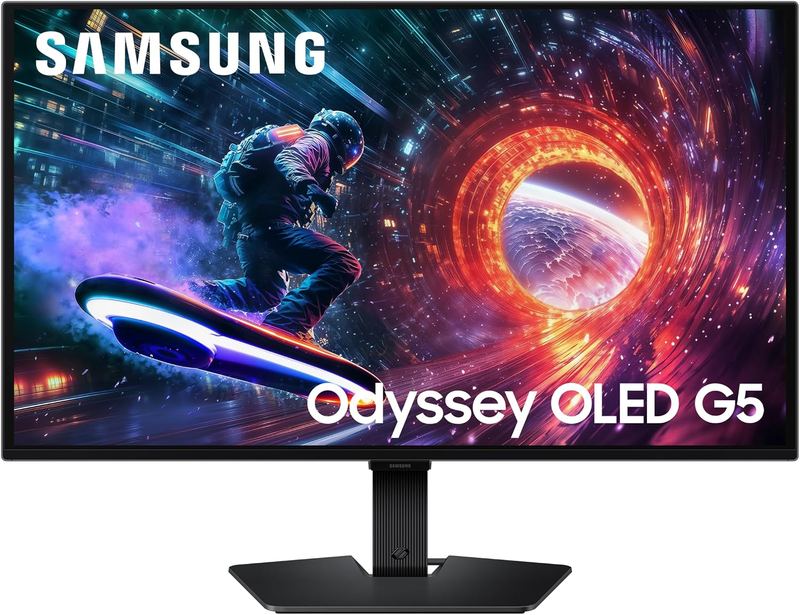
By forgoing a traditional backlight, each of the 8,294,400 pixels in a 4K OLED generates its own light and can turn off entirely. This yields perfect blacks and no blooming. For the gamer, the technical edge is in response time: OLED pixels transition far more quickly than most LCD-based Mini-LEDs, resulting in cleaner motion at high refresh rates.
Mini-LED: Backlight and Brightness
One should not mistake Mini-LED for a different kind of LCD panel. It is a full-array backlight technology placed behind an IPS or VA panel, with some models boasting thousands of independently managed dimming zones.
This setup confers a brightness advantage. In an RTINGS HDR test, for example, a Mini-LED put out 1,408 cd/m² across the full screen, compared to the OLED's 269 cd/m². When comparing the two on a small HDR highlight, however, the OLED was the stronger performer at 1,255 cd/m².
Text and Productivity
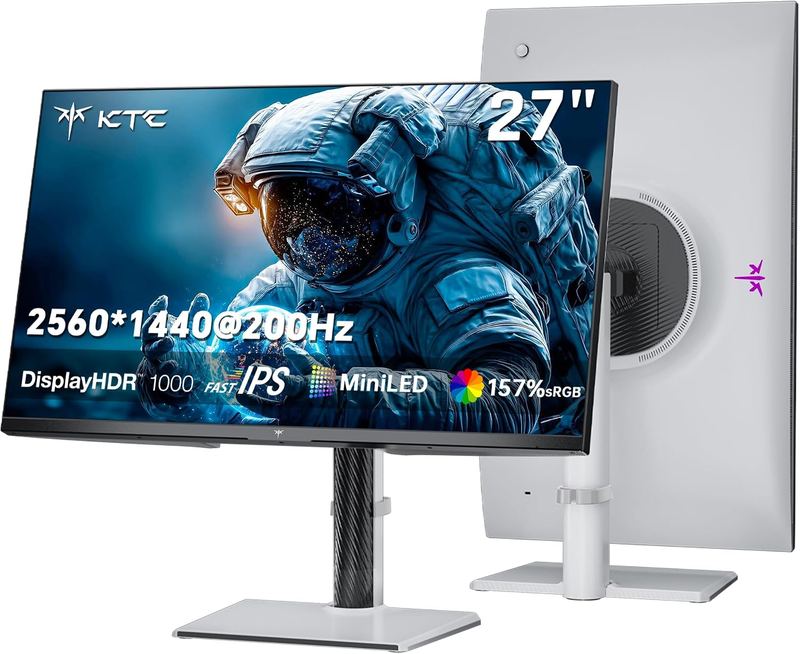
For office and desktop work, the conventional RGB subpixel layout of an LCD gives Mini-LED on Amazon the upper hand. With QD-OLED and WOLED employing different structures, you may notice color fringing on an OLED monitor, though a higher pixel density, such as 4K, will mitigate it.
Making a Choice
If the priority is competitive gaming, motion clarity, and deep blacks in a dark room, the numbers favor OLED. But for sustained brightness in a well-lit room and to avoid burn-in during long productivity sessions, Mini-LED is more practical. However, the "Mini-LED" moniker is not the whole story. Performance is determined by the LCD type, the algorithm, resolution, and the number of dimming zones in use.


0+ members already saving
Get Early Access to Major Markdowns. That's Profit Lounge!
Major markdowns
We catch the big drops most buyers miss.
Free food
Stay full and focused for the next deal.
Early access
Be first in line the moment prices drop.
Get Early Access to the Best Deals Today
Join the FREE community and start finding deals now!
Join PremiumPhotos: success from actual users. Results vary by individual.